LoRaWAN Guides Overview
LoRaWAN Guides overview
Vendor-neutral hardware and firmware engineering guides for building custom LoRaWAN end nodes from the ground up using discrete transceivers like Semtech SX1276 and ESP32 microcontrollers.
Get started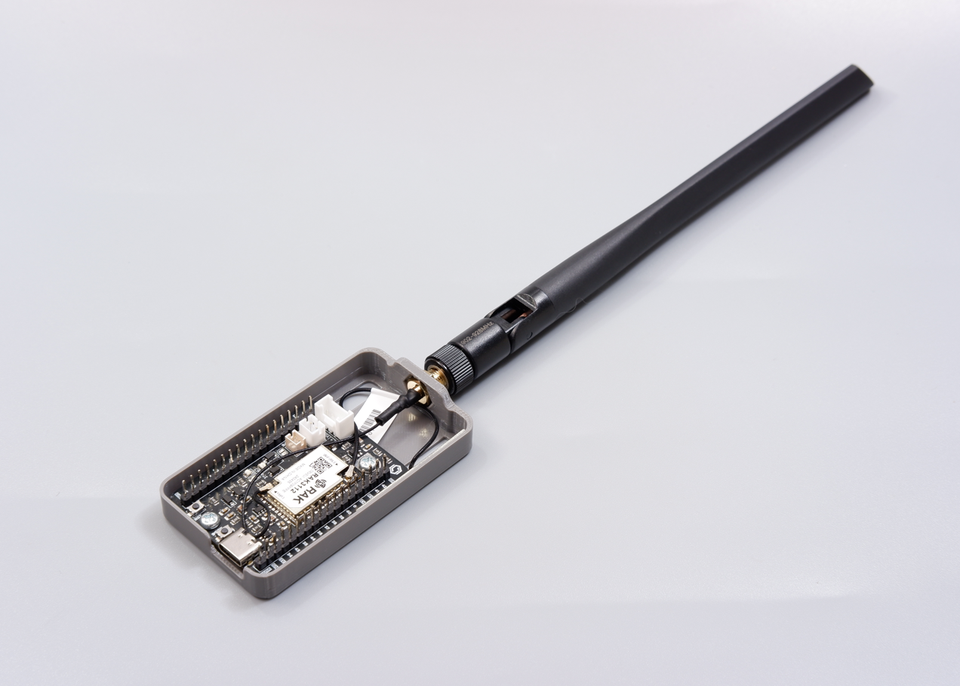
Modular LoRaWAN engineering
Bridge the gap between raw RF hardware and cloud-connected LoRaWAN telemetry.
While our Devboard Guide Series focuses on our pre-assembled, factory-calibrated Cubicore Devboard (ESP32-S3 + SX1262), this series provides modular, vendor-neutral engineering guides for building custom LoRaWAN end nodes from the ground up using discrete transceivers and standalone development boards.
These guides apply to developers and engineers integrating standalone LoRa sub-GHz RF transceiver modules (such as Semtech SX1276, SX1262, HopeRF RFM95W, and AI-Thinker Ra-01H) with 32-bit microcontrollers, standard LoRaWAN Network Servers (like The Things Network), and Cubicore Gateways.
What you will learn
Embedded and network-layer concepts required to build robust, field-grade LoRaWAN end nodes.
- Microcontroller Selection (Why 32-Bit MCUs Are Required) — Learn why legacy 8-bit platforms like the Arduino Uno (ATmega328P) cannot reliably run modern LoRaWAN 1.0.4 stacks due to flash exhaustion, SRAM depletion, clock drift, and 5V logic hazards, and why 32-bit platforms such as the Espressif ESP32 and ESP32-S3 are the standard choice.
- Transceiver Wiring & Interrupt Architecture — Understand the distinct hardware interfaces of the classic SX1276 and newer SX1262, including why both
DIO0andDIO1must be wired on the SX1276 for LoRaWAN Class A RX1/RX2 receive window timing. - LoRaWAN 1.0.4 OTAA Provisioning — Configure Over-the-Air Activation (OTAA) on The Things Network (TTN), understand
DevEUI,JoinEUI, andAppKeycredential generation, and format cryptographic keys correctly in MSB (Big-Endian) byte arrays. - Dual-Channel vs. 8-Channel Gateway Operation — Configure end nodes for fixed-frequency dual-channel gateways (Cubicore Gateway Pocket and Cubicore Gateway Hub) using the two golden firmware rules (
node.setADR(false);andnode.setDatarate(2);) versus standard dynamic multi-channel commercial concentrators. - DevNonce Persistence & Zero Flash Wear — Protect your MCU's internal NOR flash memory against premature write fatigue using the "Flash for Bootstrapping, RAM for Runtime" architecture with ESP32 NVS
Preferences.h, or eliminate flash writes entirely usingRTC_DATA_ATTRSRAM preservation across deep sleep cycles. - Binary Payload Formatting & Airtime Optimization — Replace heavy JSON strings with compact binary byte arrays (reducing RF packet size by 80%), and decode uplinks using custom JavaScript payload formatters on TTN.
Choose a path
Work through the series in order, or jump to the topic you need.
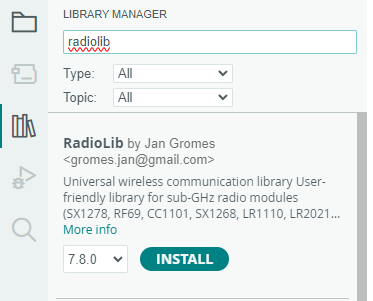
SX1276 LoRaWAN with RadioLib
Complete, production-grade guide for wiring and programming Semtech SX1276, HopeRF RFM95W, and Ra-01H breakout modules with ESP32, RadioLib, and TTN.
Build node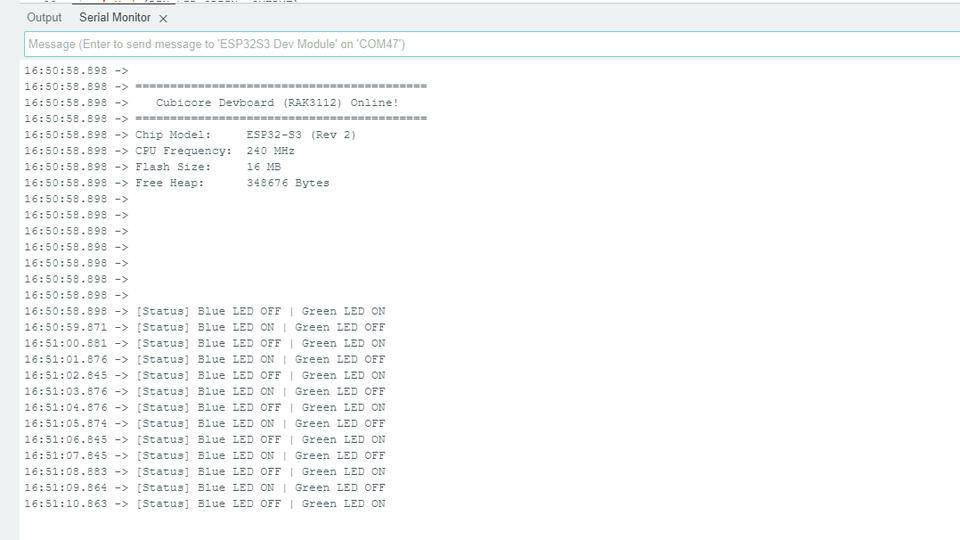
SX1276 AT Command LoRaWAN Modem
Turn an ESP32 and SX1276 into a RAK RUI3-compatible serial AT command modem to configure keys, spreading factors, and send packets without recompiling code.
Explore AT modemRelated resources
- Cubicore Devboard Guide Series — step-by-step tutorials for the integrated Cubicore Devboard (ESP32-S3 + SX1262)
- Cubicore Gateway Guide Series — setup, configuration, and cloud forwarding for Cubicore Gateways
- Integrating with Cubicore Cloud — route TTN telemetry directly into Cubicore Cloud
- Products — browse the full Cubicore hardware catalog
- Downloads — firmware, datasheets, and drivers